
Workshop & storage: Which storage solution speeds up repairs?
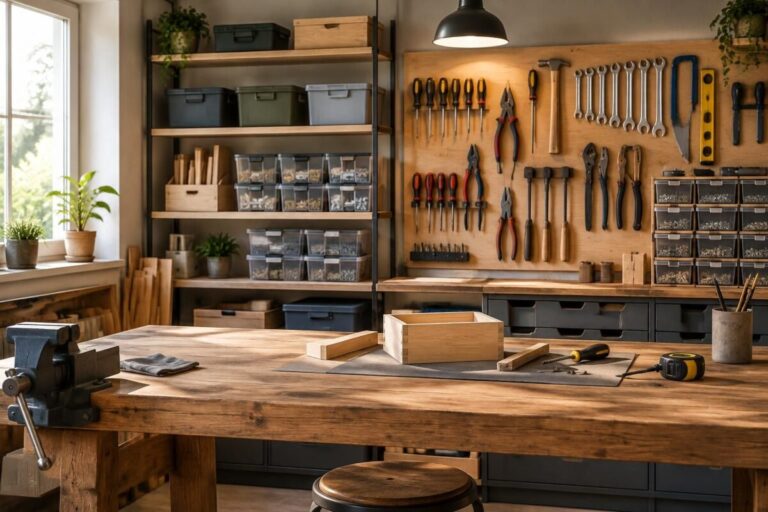
Hi, Kyl here. The storage setup that speeds up repairs the most is an area organized by task, with frequently used tools in sight and small parts labeled. A pegboard near the workbench, clear boxes, and a cabinet for sensitive materials make an effective foundation. The goal is simple: spend less time searching and keep walkways clear.
What to do now: organize your workshop storage
Start by identifying the tools you use for almost every job, then move them closer to the workbench. For more workshop layout ideas, see these tips on workshop storage to save space and this method for identifying the area that slows down repairs.
- Clear a work area and sort the tools into four categories: keep, repair, donate, or discard.
- Place tools used every day within arm’s reach, near the workbench.
- Group accessories by task: drilling, screwdriving, cutting, or electrical repair.
- Store screws, nuts, and wall plugs in clear boxes with legible labels.
- Clear the floor and keep access to machines, lighting, and safety equipment unobstructed.
Choose storage suited to repair work
Good tool organization follows the workflow rather than a decorative arrangement. If you often repair furniture, keep the tape measure, square, drill/driver, bits, and commonly used screws together. This avoids trips back and forth between the workbench and distant storage.
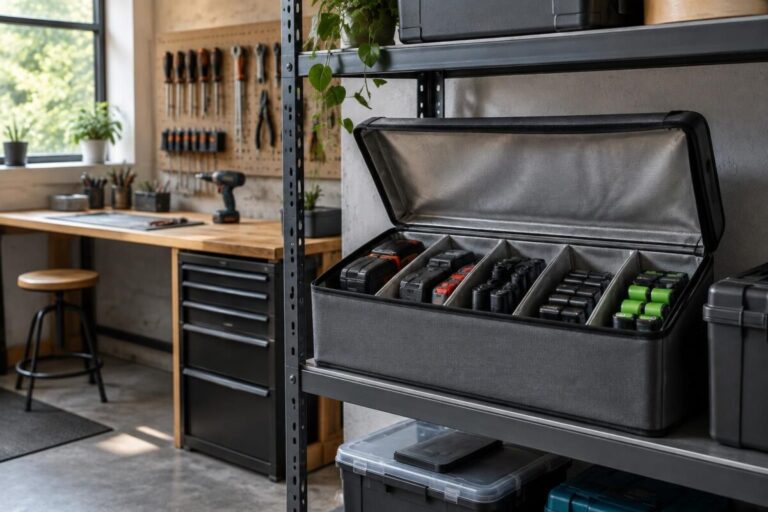
A pegboard works well for lightweight, frequently used tools such as pliers, screwdrivers, and hammers. For heavier machines, a tool cabinet or sturdy wall mounts offer a more stable solution, depending on the model and how it is installed. Closed storage boxes protect consumables from dust.
| Storage | What to store there | Expected benefit |
|---|---|---|
| Pegboard | Frequently used hand tools | Find and grab tools quickly |
| Labeled boxes | Screws, wall plugs, and small parts | Reduce the need to sort parts during repairs |
| Tool cabinet | Machines, products, and less frequently used equipment | Protect items and clear the work surface |
| Mobile cart | Repair kit or tools for a project | Keep tools within easy reach |
If you have a small workshop, make use of the walls and choose modular storage. If the space is shared, assign each user a color or area so tools are easy to put back in the right place.
Follow three steps to speed up every job
Making the most of your space starts with sorting, not buying new furniture. A simple method can help you create useful storage without putting the workshop out of action for days.
- Step 1: Clear the workbench and sort the contents of one area at a time. Set aside duplicates and tools that need repair.
- Step 2: Put everyday tools in the most accessible area, then group items by task. Label the bins as soon as you set them up.
- Step 3: After each work session, spend a few minutes putting tools back in their place and clearing the floor.
While reorganizing, a DIYer who was often searching for drill bits moved them right next to the drill/driver. The next repair started without rummaging through drawers: a small change in where things were stored was enough to speed up repairs.
As a simple rule reminds us: “A tool put away is a tool ready to use.” A visible designated spot also makes it easy to see what is missing or needs replacing.
Keep your workshop safe and easy to use
Effective storage should not create new hazards. Secure mounts firmly, keep heavy items at an accessible height, and set aside a closed storage space for products that require special precautions. Also keep walkways and access to the fire extinguisher clear.
Routine matters just as much as the layout. A quick tidy-up at the end of each session prevents the workbench from becoming a dumping ground and lets you get back to work without wasting time.
Frequently asked questions about workshop storage
Where should I start in a cluttered workshop?
Choose a small area, such as the workbench or a drawer. Sort its contents, clean the space, and assign a clear place for the tools you use most often.
Is a pegboard enough for storing tools?
It works well for lightweight or moderately heavy hand tools. For heavy machines, choose a suitable mount or a securely installed cabinet, depending on the model and the wall.
How can I avoid mixing screws and small parts?
Use clear compartment boxes and label each category by type or size. Store them all in the same place to make sorting parts easier.
How do I keep the workshop tidy after a repair?
Put each tool back in its place, throw away packaging, and clear the work surface at the end of the session. A short, regular routine is easier to maintain than a major occasional cleanup.
Thanks for your interest; Kyl