Tool safety: What wear and tear should never wait?
Hello, this is Kyl. Wear that must never be ignored affects cables, housings, handles, blades, and safety devices: stop the tool and replace or have the part repaired before using it again. A crack, exposed wire, abnormal play, or unusual vibration can quickly turn a simple task into an accident. A quick check before each use helps spot warning signs.
Take action now:
- Unplug the tool or remove its battery before any inspection or work.
- Check the cable, plug, housing, handle, and safety devices.
- Look for cracks, play, corrosion, unusual noises, and vibrations.
- Remove the tool from the work area if a part could come loose or injure you.
- Consult the manual before lubricating or replacing a part.
To distinguish a part that is simply worn from dangerous wear, inspect the components that protect the user and keep the tool under control. These pointers complement the advice on worn parts that become dangerous and on components that threaten the motor.
Tool wear: signs that mean you must stop
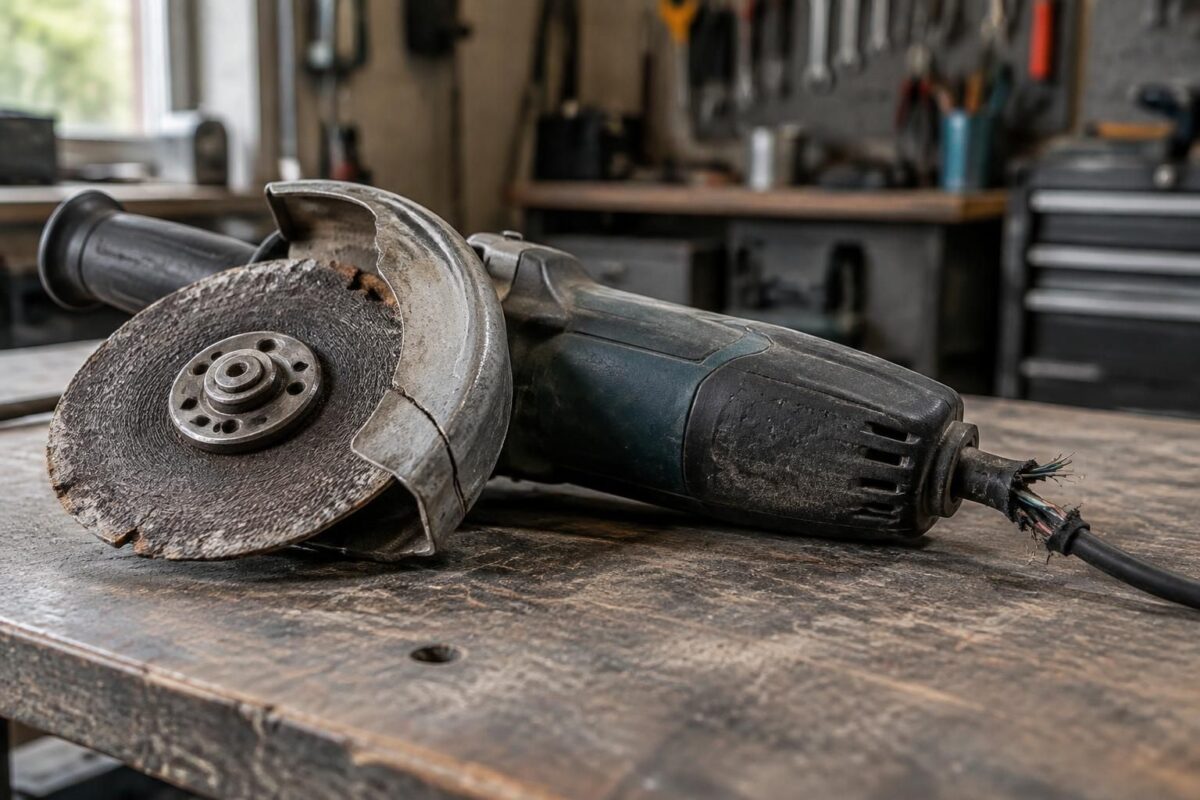
A cut cable, damaged plug, cracked housing, or loose handle requires an immediate stop. This kind of damaged tool can expose you to electric shock, cuts, or loss of control.
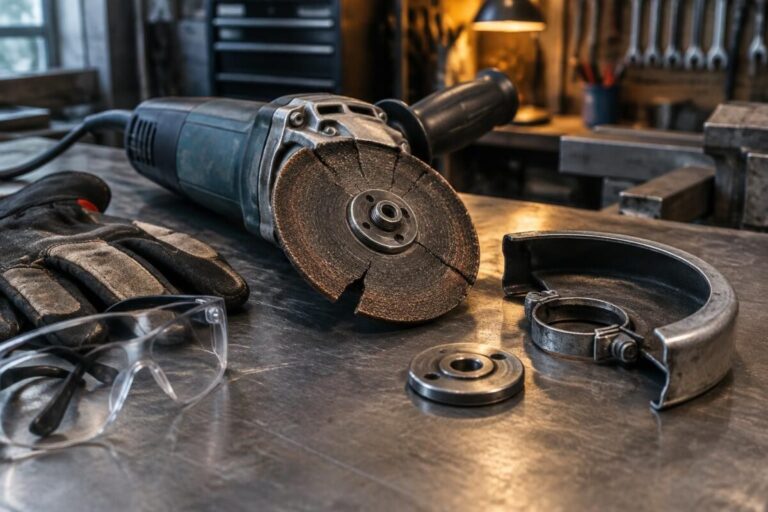
A cracked or improperly secured grinding wheel must not be used. On a saw, a deformed blade or jammed guard increases the risk of an accident. If the cable is damaged, stop using the tool and have it repaired; if a consumable is worn, replace it with a compatible part before continuing.
Once, in a workshop, a screwdriver that was vibrating slightly was set aside before a series of jobs. An inspection revealed play in the chuck: that pause prevented a bit from coming loose during use.
“If a tool changes its sound, stop and check it.” This simple habit protects your hands and often helps limit the damage.
Tool inspection: check critical parts
Inspect your tools before each use, then adjust how often you check them based on the intensity of the work. Dust, moisture, and prolonged use accelerate wear; a tool used every day therefore needs more frequent monitoring than one used occasionally.
| Component to check | Warning sign | Action to take |
|---|---|---|
| Cable, plug, and battery | Cut, exposed wire, deformation, or overheating | Stop and repair or replace |
| Housing, handle, and guard | Crack, loose part, or jammed guard | Do not use until repaired |
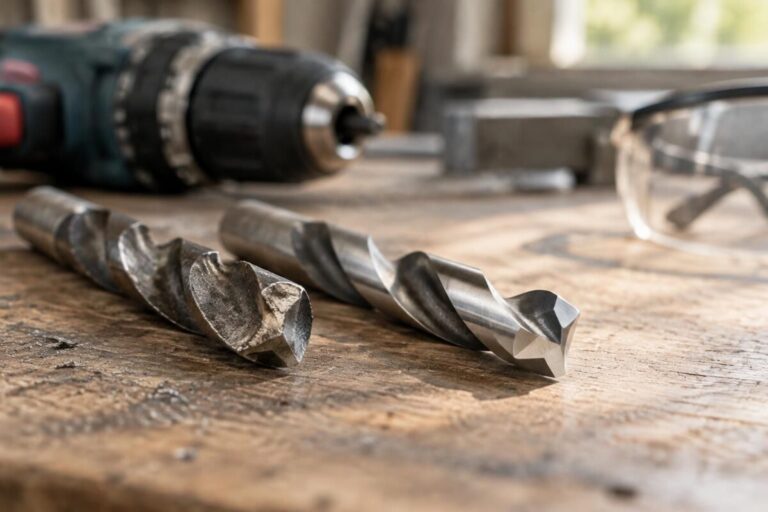
| Blade, disc, or bit | Crack, deformation, missing tooth, or poor fit | Replace immediately with a compatible part |
| Mechanism and motor | Unusual play, noise, vibration, or overheating | Unplug and have it inspected |
Light dirt can be dealt with using an appropriate cleaning method, but a crack in a structural part is not a fault to keep an eye on “for a little longer.” If in doubt, take the tool out of service until it has been checked.
Preventive maintenance: act before a breakdown
Preventive maintenance combines cleaning, inspections, and replacement of parts that wear out regularly. It limits unexpected downtime and helps maintain consistent cutting or drilling; the benefits vary depending on the tool, its use, and the working environment.
- Step 1: unplug the tool, remove the battery, and place it on a stable surface. Wear the appropriate protective equipment for the task and follow the manual.
- Step 2: clean the accessible parts, then check the fasteners, guards, moving parts, and consumables. Note any unusual noise, overheating, or play.
- Step 3: replace only compatible parts, lubricate according to the manufacturer’s instructions, and record the date and work performed.
Carbon brushes, belts, seals, filters, and sanding pads are common wear parts. Their lifespan depends on the model and intensity of use: follow the manufacturer’s instructions rather than waiting for a clear breakdown.
Wear checks do not always require complex equipment. A logbook is enough to record inspections, faults, and replacements; in a larger workshop, a maintenance management tool can help schedule checks.
Tool safety: good habits for everyday use
Never use a tool for anything other than its intended purpose: a screwdriver is not a pry bar, and a wrench is not a hammer. Store tools clean and dry, with blades protected, to limit corrosion and injuries the next time you pick them up.
Injury prevention also depends on choosing the right consumable and following the manufacturer’s instructions. If a repair goes beyond the work permitted in the manual, hand the tool over to a qualified person rather than opening it up at random.
Useful questions about tool wear
Can you use a tool with a slightly nicked cable?
No. Unplug it and stop using it. A damaged cable must be repaired or replaced by a qualified person before the tool is used again.
How often should you inspect your tools?
Check them before each use. Add more thorough inspections based on how often they are used, working conditions, and the manufacturer’s recommendations.
Is unusual vibration always a warning sign?
It may indicate a poorly secured accessory, a worn part, or a mechanical fault. Stop the tool, unplug it, and find the cause before resuming work.
When should a worn part be replaced?
Replace it without delay if it compromises the tool’s protection, fastening, or control, or if the manufacturer says it is no longer serviceable.
Thank you for your interest; Kyl