Hand tools: which duo complements essential machines?
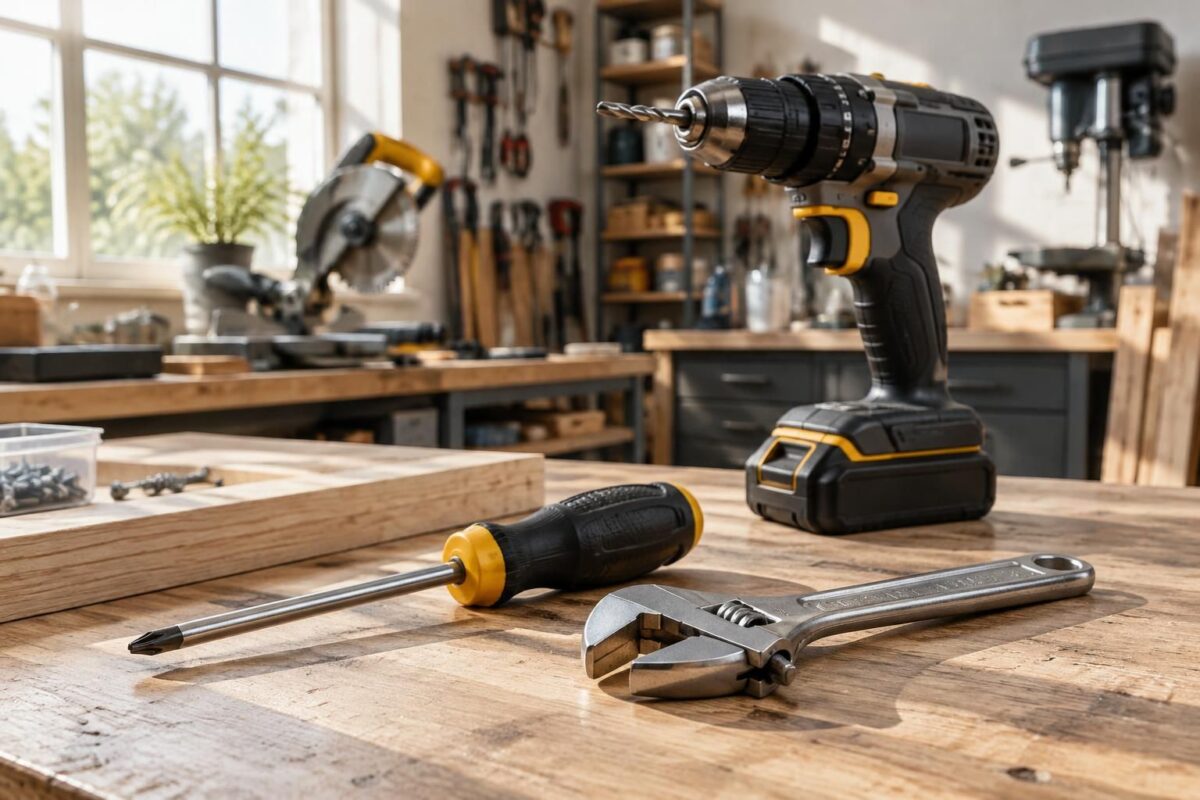
Hello, Kyl here. The best pairing to complement power tools is a well-chosen screwdriver and a reliable adjustable pliers: one drives screws precisely, while the other holds and tightens without damaging parts. With a hammer, a tape measure and a few wrenches, you can already tackle many small jobs. The idea is simple: choose a few tools, but choose the right ones, so you can work neatly and safely.
What to do now:
Start by identifying the jobs you do most often, then choose your hand tools to complement your power tools. To put together a starter list and check what the tools are used for, see the essential tools for getting your projects started and this practical guide to hand tools.
- Check which bits and accessories you already have for your drill.
- Add a flathead screwdriver and a Phillips screwdriver suited to common screws.
- Choose adjustable pliers and diagonal cutting pliers for holding, tightening or cutting.
- Keep a hammer, tape measure and square within easy reach.
- Have safety glasses and gloves ready, depending on the job.
The right pairing of power tools and hand tools
A drill or jigsaw speeds up repetitive tasks. Hand tools take over when it’s time to adjust, hold, measure or finish an assembly precisely. This complementarity of tools means you don’t need to get out a power tool for every small task and helps you better control the result.
A screwdriver complements a drill when a screw needs a delicate finish or access is tight. Pliers and wrenches are used to hold a part, adjust a nut or tighten something without putting unnecessary strain on the machine. “The right tool makes the job easier,” as a simple principle to keep in mind in the workshop.
Once, a flat-pack piece of furniture became loose after being screwed together too quickly with a drill. One final manual tightening with the right screwdriver was enough to stabilize the assembly without damaging the screw heads.
Tools to keep near your power tools
You don’t need to buy a large toolbox full of accessories. A set of around 10 to 15 well-chosen tools often covers common household needs, depending on the projects and materials.
| Tool | What it’s for | Complements |
|---|---|---|
| Flathead and Phillips screwdrivers | Driving screws and making adjustments with control | Drill/driver |
| Adjustable pliers and diagonal cutting pliers | Holding, tightening and cutting | Drill or minor plumbing jobs |
| Claw hammer | Striking, assembling or removing a nail | Jigsaw and woodworking |
| Open-end wrenches and Allen keys | Tightening or loosening nuts and assemblies | Furniture assembly and maintenance |
| Tape measure, square and pencil | Measuring and marking before cutting | Jigsaw or hand saw |
When choosing tools, look for comfortable handles and sturdy metal parts. Hardened or forged steel is often a good choice for tools that are put under strain, while a non-slip handle improves grip. Reliable equipment may cost more upfront, but it often helps you avoid having to replace it quickly.
Choose tools for the job: two quick examples
If you’re assembling furniture, start with a suitable screwdriver, Allen keys and a tape measure; use the drill gently, then finish tightening by hand. If you’re cutting wood, mark and secure the workpiece first, then use a jigsaw or hand saw, depending on the cut and the finish you want.
A simple three-step method
- Step 1: identify the material and the task. A screw in wood, a nut to loosen or a cut to make all require different tools.
- Step 2: measure, mark and secure the workpiece. A clamp or stable workbench reduces slipping and makes your work more precise.
- Step 3: use the power tool to make progress, then finish by hand if tightening or adjustment requires finesse. Then check the fastening and the condition of your tools.
When driving screws into wood, pre-drilling with a suitable bit often reduces the risk of splitting. When cutting, keep the blade aligned with the line and move forward without forcing it: consistency matters more than speed.
Safety and storage: habits that make your equipment last
Before each use, check that the hammer handle is secure, the utility knife blade is in good condition and the pliers don’t slip. Wear safety glasses when cutting or doing tasks that may send debris flying, and choose gloves suited to the task, keeping them away from moving parts of any machine.
After a DIY project, wipe down your tools and store them in a dry place. Protect sharp blades and keep drill accessories in a case: you’ll save time on your next project and reduce the risk of wear or injury.
Useful questions about adding to your hand tools
Which hand tool best complements a drill?
A suitable screwdriver is the most direct complement: it lets you finish tightening precisely and work in hard-to-reach places.
Do you need to buy a very comprehensive set to get started?
Not necessarily. A selection of around 10 to 15 reliable tools is often enough for common jobs, depending on the projects and materials.
What is the difference between a jigsaw and a hand saw?
A jigsaw powers the cut and is suitable for many cutting patterns. A hand saw offers direct control and requires neither a battery nor a power supply.
How can you avoid damaging a screw when tightening it?
Choose a bit with the right shape and size, keep the tool aligned with the screw, and finish tightening gently by hand if necessary.
Thank you for your interest; Kyl